

You can read about the other things Amtrak is bad at here.
The first US transcontinental railroad took six years and cost in the ballpark of $4 billion.1
Amtrak’s new Acela trains have taken nine years – three of which were delays – and $3.25 billion. And they’ve only finished five of them, out of 28.2 And they suck!
They’re so bad that it’s difficult to know where to begin. Let’s start with doors.
On a recent trip, I thought I was only going to be delayed because Amtrak cannot figure out how to maintain its catenary wires3 properly. However, once the wires were addressed, we simply sat their watching other trains leave. It seems that no one knew how to close the doors. Closing the doors is such a finicky thing that the trainset had to be restarted several times. So, I sat in the dark for a while as the locomotive rebooted. We did this for an hour. Apparently, it’s a common problem.
While admiring the wide open doors, notice that ramps built into the trains are a nice touch. They’re meant to extend to the platform when the train is in a station, which should facilitate things such as wheelchairs. Of course, Amtrak seems to have given up on getting them to work; they’ve been unused my last few trips. Wheelchairs can jump a 9-inch gap though, right? I’m sure that’s a thing.
Once you get moving, the trains are supposed to be faster and more modern. The posted top speed is only slightly higher than the old Acela sets, but the new ones have a tilting technology that allows them to move more quickly on the northeast’s curly-whirly old tracks. Except, the tilt technology is not engaged, and there’s no word on when Amtrak will turn it on. I, for one, am skeptical it will ever be used.
At least the train interiors are uncomfortable and inconvenient. The chairs are hard as bricks.4 What’s more, after a few months in service, the recline feature is broken on every other chair. Since they don’t feature a recline feature so much as a seat that shifts forward, being stuck in the low position means you’re forced to sit slumped over like a burlap sack full of potatoes.
Glowing reviews of the new kit mention how nice the bathrooms are, with automatic doors, faucets, etc. This is a ridiculous sentiment because Amtrak cannot maintain anything. The automatic bathrooms doors are – in a running theme here – often broken. In the best of cases, they open at about 1/5 the speed of a normal hand-operated mechanical door. The sensors for the faucets and hand dryers are finicky. And, since the dryer is right next to the faucet which is right next to the soap, it’s a crapshoot as to which will turn on. Also, the dryers themselves are nearly useless. Dyson dryers have been on the market for something like 15 years; these models gently blow cool air on you, meaning you’ll inevitably just have to dry your hands on your clothes. Actually, maybe just hope you don’t need a bathroom, because the door problems mean they’re frequently out of service anyway.
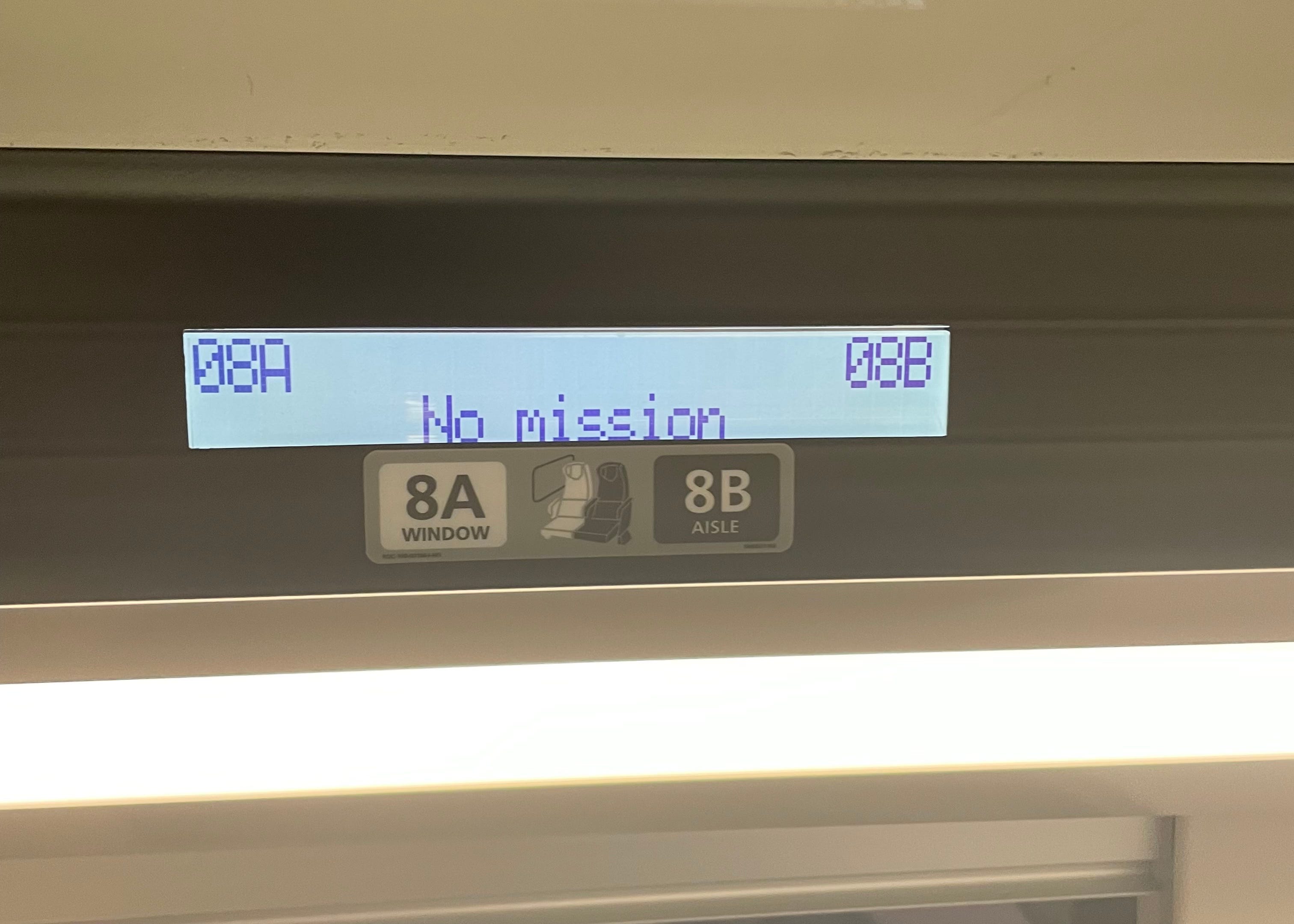
There are also a bunch of random features that Amtrak just doesn’t use. For instance, there are screens near the seats that I’ve only ever seen display “no mission,” which is pretty spot on really. However, these are not off-the-shelf equipment. We refuse to import trains from places like France or Japan where factories for making them already exist. So, instead, these were custom designed and built in a brand-new factory in the Buffalo, NY. Presumably, Amtrak designed, requested, and paid for things they had no intention to use.
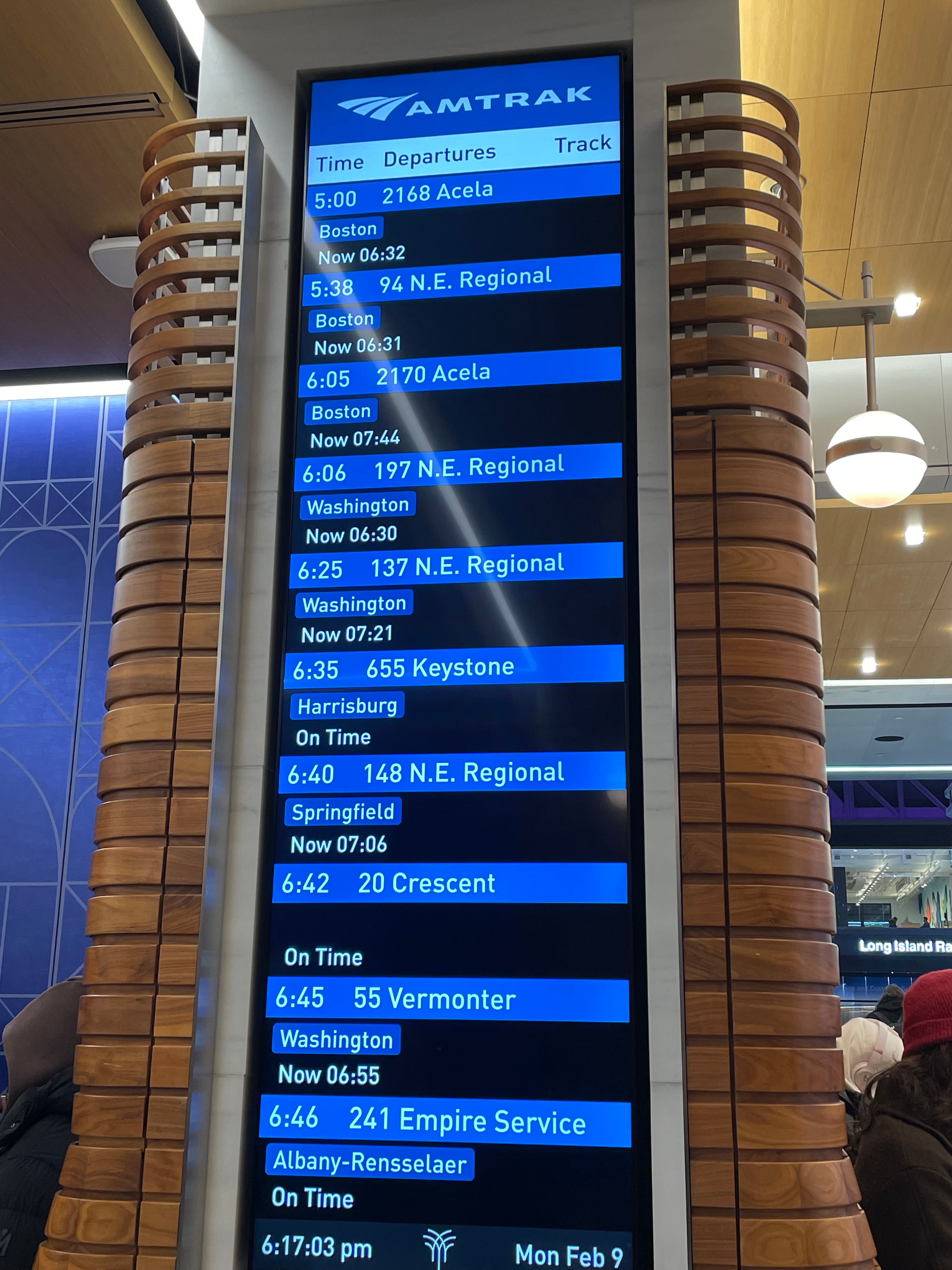
All of this is a bit academic though, because odds are your train will be cancelled. My last two Acela trips have turned into Northeast Regional trips (on Amtrak’s 60+ year old clunky creaking coaches). Amtrak didn’t even refund the ticket for one of the cancellations; I had to dispute the transaction with my bank (after waiting on hold with Amtrak customer service for over an hour).
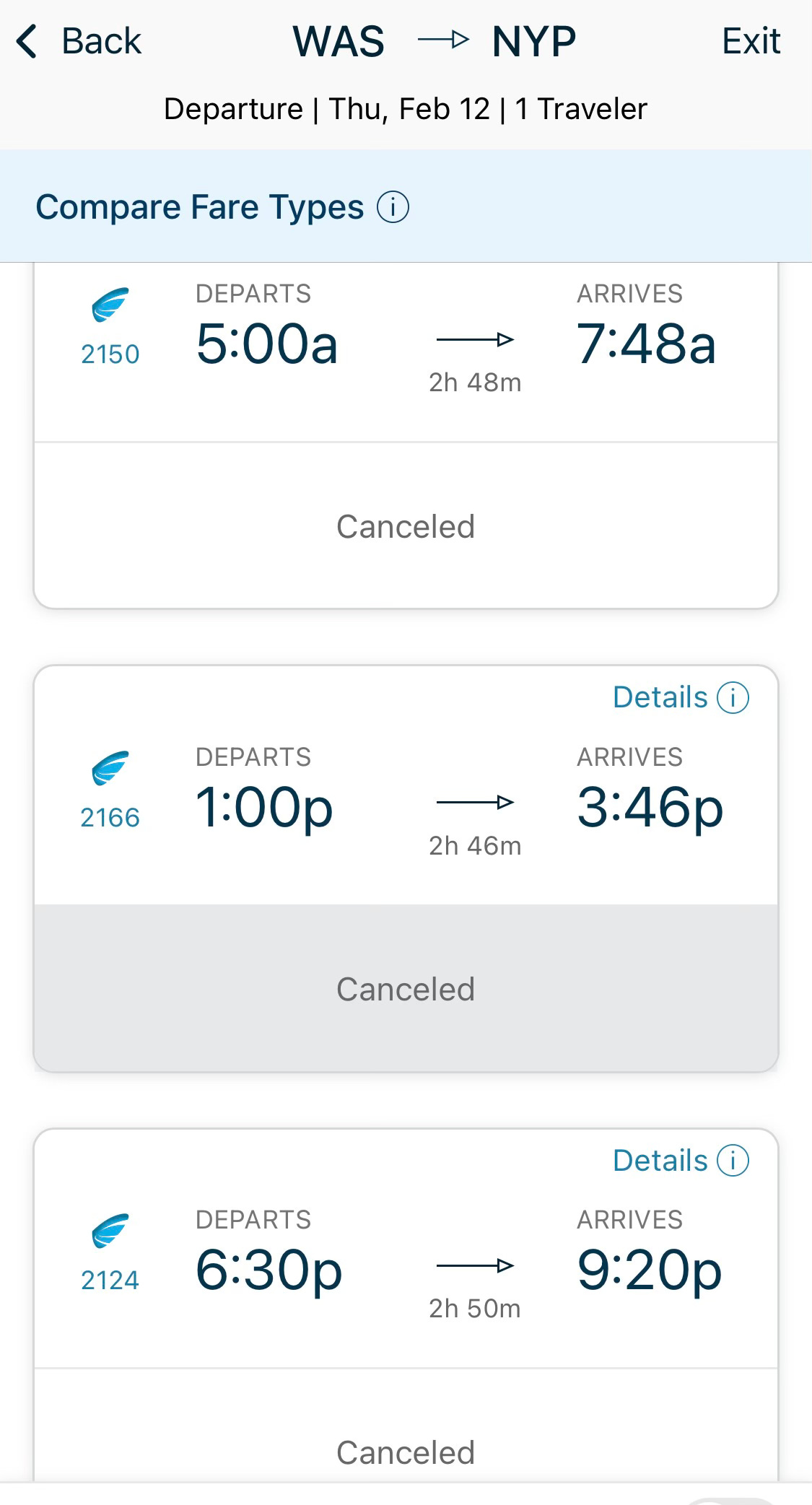
Moreover, the railroad’s excuses for the shoddy Acela service are laughable. A few particular examples: It was cold outside three days prior. Never bothered to upgrade the train maintenance facilities. Maintaining permanently coupled trains is so hard.5
Reviews of the new Acela trains are missing the point when they focus on how pretty the new equipment looks. Amtrak spent billions on these, missed deadlines by a country mile, never learned to operate the things properly before putting them in service, and doesn’t even seem to think this should count as a failure. The whole mess would be funny if I weren’t constantly sitting motionless on a railroad in New Jersey.
Amtrak, a Beginner's Guide

If time spent doing something is at all correlated with skill, then I am one of the best Amtrak passengers now living. In my thirty-[redacted] years, I must have taken at least 1,000 of their trains.
2025 US dollars
Presumably, (hopefully?) more of them are actually in physical existence. Amtrak has only accepted five for service so far though.
These are the overhead wires from which trains draw power. For most railroads they are basic pieces of infrastructure that just work. For Amtrak, they sometimes work, except when it’s hot, or cold, or raining, or snowing, or…
This I’m alright with actually, because I imagine the cushions will become more cushiony overtime.
I’m extrapolating from the fact that the parts holding the cars together were corroded before they even went into service. In any event, permanently coupled cars are standard on railroads in just about every other rich country. They’re only challenging to maintain relative to Amtrak’s track record.